The five operational fronts of China’s robotics economy
Robofront does not track robotics as a product category. We track it as five operational fronts — the surfaces where machines stop being demonstrations and start carrying load.
Most robotics coverage organises itself around launches: a new humanoid, a faster quadruped, a cheaper arm. That framing misses the more important shift. The story in China is no longer the machine — it is the environment the machine now lives in. A robot in a press demo proves a capability. The same robot in a hotel corridor, a managed showroom, or an assembly cell proves something more consequential: that the surrounding economy has reorganised itself to absorb it.
These are the five fronts the desk watches. They are not content buckets. They are the places where the transition from spectacle to infrastructure becomes measurable.
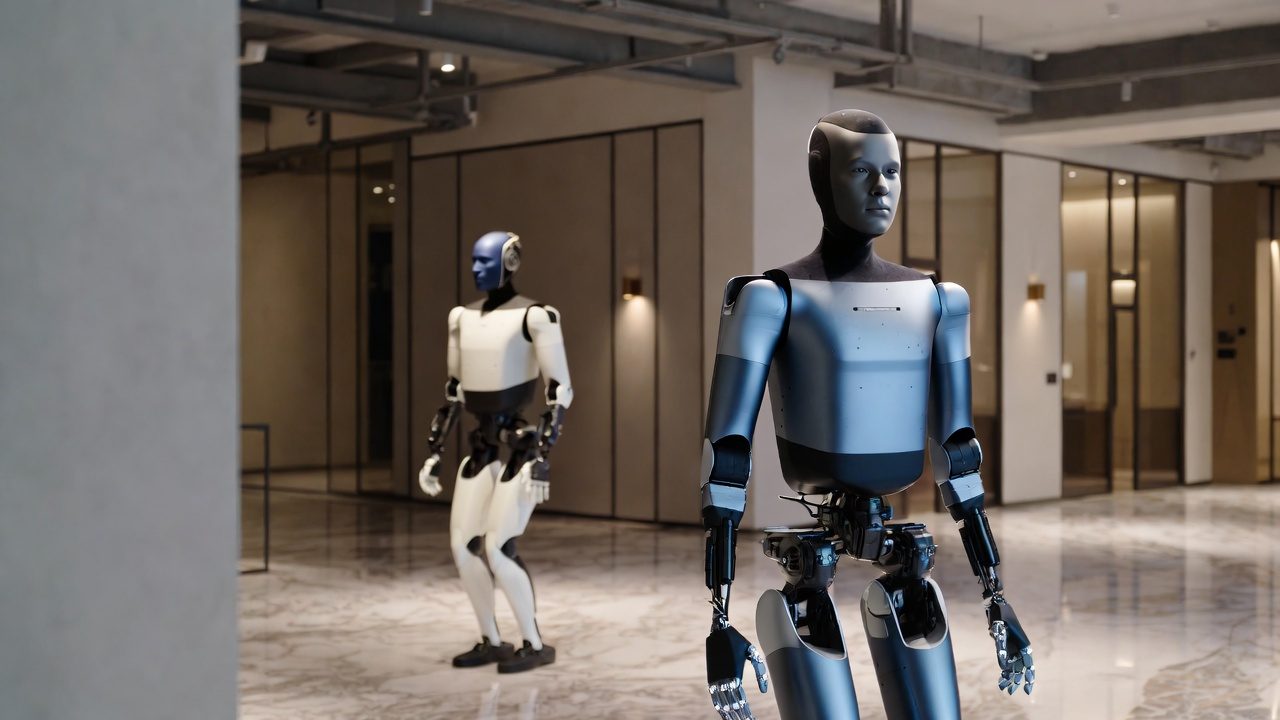
From symbolic presence to industrial adjacency
Humanoids are China’s most visible robotics export — the viral clip, the stage walk, the choreographed backflip. The signal the desk tracks is quieter: human-form systems being parked next to real work — pilot lines, logistics aisles, controlled service floors.
Adjacency precedes integration. A humanoid standing beside a process is the leading indicator that the process is being re-engineered around it.

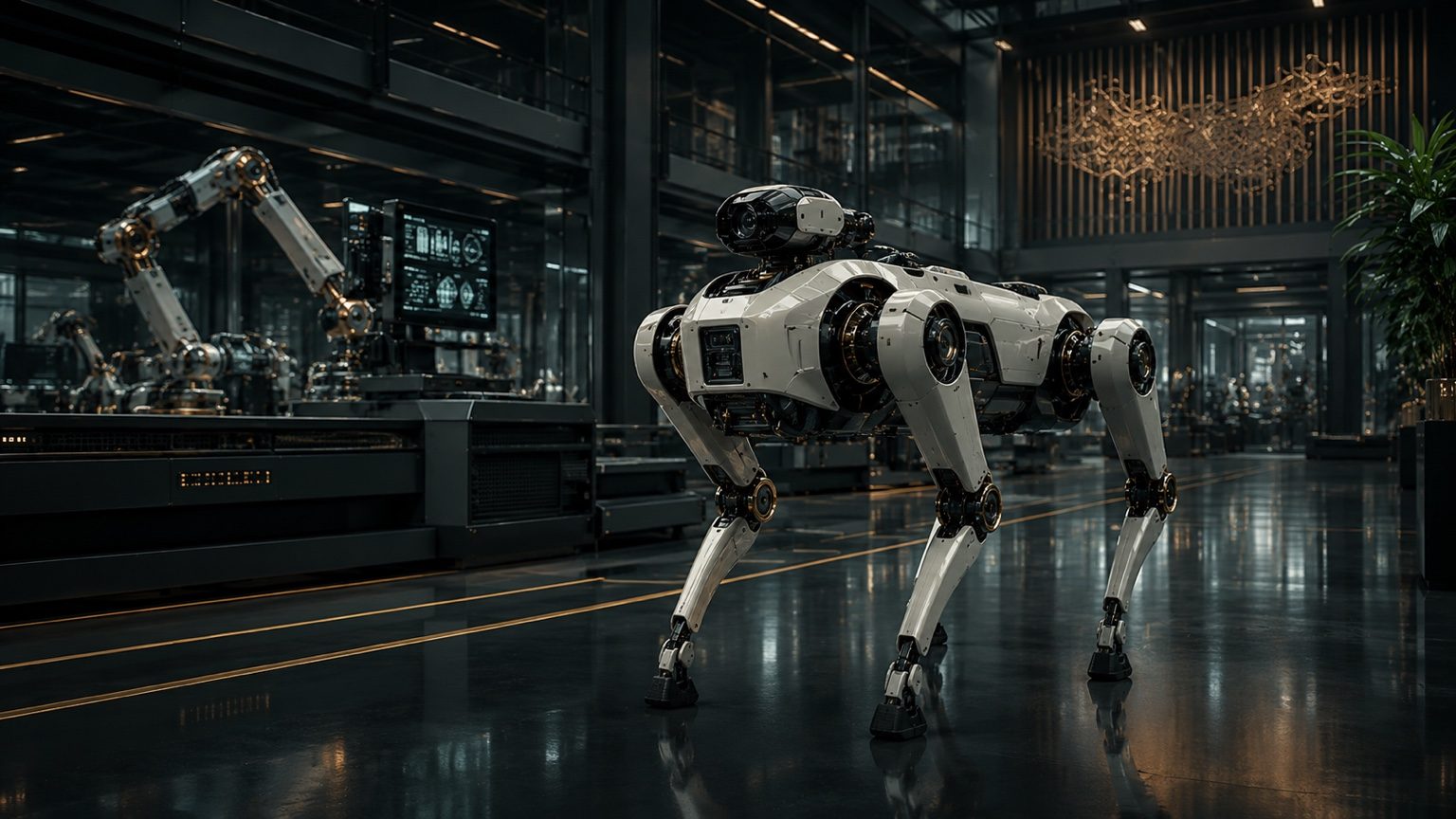
Robot dogs and mobile platforms leave the demo floor
Quadruped and wheeled platforms are expanding from choreographed demonstrations into controlled deployment zones: inspection routes, security patrols, site logistics, managed interiors.
The commercial reality lives in the gap between a demo environment and a controlled deployment zone. Watching that gap close is more informative than watching any single launch.

Manipulation, assembly, precision control
The least visible front and the most consequential. Assembly-floor visibility is rising faster than public understanding — arms and cells doing manipulation and precision work that rarely makes a headline.
The moat here is not the robot. It is the dense supply chain that makes iteration cheap, which is exactly why this front concentrates in one place.
Hospitality and facilities as the public interface
Service robotics is maturing from novelty into an operational layer — hotels, restaurants, facilities, front-of-house automation. This is where the public meets the transition first.
Front-of-house automation is the visible edge of a deeper shift. When a service surface normalises a machine, the customer’s expectation moves — and expectation is what pulls deployment forward.
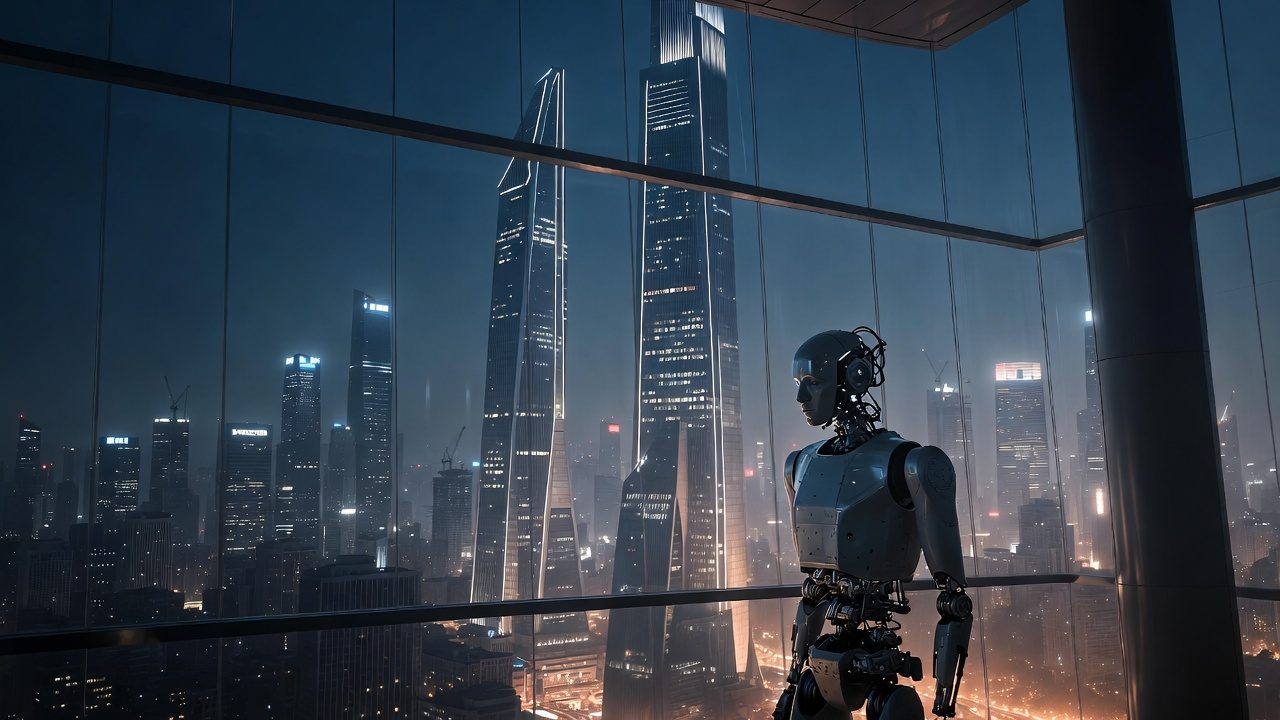
When robotics starts behaving like infrastructure
The fifth front is not a machine type but a condition: the moment robots stop being events and become a present layer of the built environment.
Shenzhen compresses prototyping, sourcing, integration and observation into a single geography. That is why the desk sits here — infrastructure is best read from inside the place that builds it.
See the fronts as they move
The domains are watched continuously and written up in long-form field reports and the weekly desk briefing.
Read the field reports →